
When your business needs serious capital — ₹1 crore to ₹100 crore — very few instruments match a high-value loan against property. But the first question every promoter asks is the same: can my property be mortgaged? The answer covers far more asset classes than most people think: residential, commercial, industrial, schools, colleges, hospitals, kalyana mandapams, godowns, warehouses and factories. Here is the complete picture.
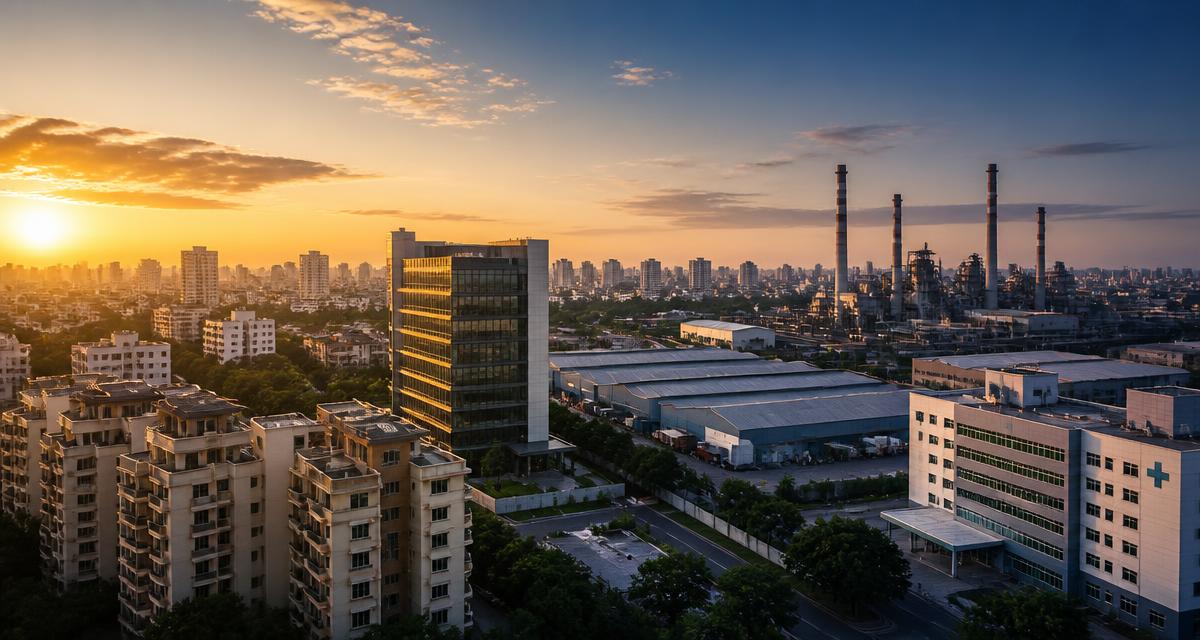
What is a high-value loan against property (₹1 Cr–₹100 Cr)?
A loan against property (LAP) lets you unlock the value of real estate you already own without selling it. In the high-value segment — ₹1 crore to ₹100 crore — the loan is structured more like corporate credit than a retail product: the lender studies the property, the borrower's cash flows and the end use, then builds a term loan, drop-line overdraft or LAP-OD hybrid around it.
These loans are the backbone of business expansion in Tamil Nadu — factory promoters in Ambattur and Sriperumbudur, hospital owners in Chennai, textile houses in Tiruppur and educational institutions across the state use them to raise large sums at secured rates, typically 9%–13% p.a. depending on lender, property type and borrower profile. For a Chennai-specific overview, see our LAP Chennai guide.
What properties can be mortgaged? The complete list
Almost any income-producing or self-occupied immovable property with a clear, marketable title can be mortgaged. Here is how lenders view each category:
1. Residential property
Houses, independent bungalows and flats — self-occupied, vacant or rented — get the highest LTV (60%–75%) and the lowest rates. A premium residential property in Anna Nagar, Adyar or Coimbatore's Race Course area valued at ₹2 crore can typically support a ₹1.2–1.5 crore loan.
2. Commercial property
Shops, office spaces, showrooms and commercial buildings in approved layouts are strong collateral. Rented commercial property is often valued higher because the lease income itself supports repayment. LTV is usually 55%–65%.
3. Industrial property — factories and manufacturing units
Factory buildings with SIPCOT/SIDCO or approved industrial land are widely accepted. Lenders verify building approval, pollution-control consent and access roads. LTV is conservative at 45%–60%, but ticket sizes are large — a factory valued at ₹15 crore can raise ₹7–9 crore.
4. Schools and colleges
Educational institutions run by trusts or societies can mortgage their buildings to fund new blocks, equipment or refinancing. Lenders examine the trust deed, recognition/affiliation status and fee income. Select NBFCs and private banks specialise in this segment.
5. Hospitals and healthcare facilities
Multi-speciality hospitals, nursing homes and diagnostic centres are prime mortgage assets — steady cash flows plus high-value buildings. Funding covers expansion, medical equipment and working capital.
6. Kalyana mandapams (marriage halls)
A uniquely strong Tamil Nadu asset class. A well-located kalyana mandapam with booking records is excellent collateral — its income is seasonal but highly predictable, and several NBFCs underwrite these actively.
7. Godowns and warehouses
Godowns and warehouses near logistics corridors — GST Road, Red Hills, Sriperumbudur — are in high demand as collateral because rental demand is strong. Leased warehouses with corporate tenants get the best terms.
Properties that usually cannot be mortgaged
- Agricultural land — excluded under SARFAESI; lenders decline it
- Vacant plots — most banks decline; a few NBFCs consider prime city plots at low LTV
- Properties with disputed or broken title chain
- Unapproved buildings or layouts (some NBFCs accept with conditions)
- Properties under litigation or already encumbered without lender NOC
Indicative loan size by property value
| Property value | Property type | Indicative LTV | Possible loan amount |
|---|---|---|---|
| ₹2 Cr | Residential | 60%–75% | ₹1.2–1.5 Cr |
| ₹5 Cr | Commercial / kalyana mandapam | 55%–65% | ₹2.75–3.25 Cr |
| ₹15 Cr | Factory / industrial | 45%–60% | ₹7–9 Cr |
| ₹40 Cr | Hospital / college | 40%–55% | ₹16–22 Cr |
| ₹150 Cr+ | Prime commercial / industrial portfolio | 40%–60% | ₹60–100 Cr |
These are indicative ranges — actual sanction depends on the valuation report, your cash flows and the lender's policy. Rates in the high-value segment are negotiated deal-by-deal.
What lenders check on a ₹1 Cr–₹100 Cr mortgage
- Title and legal: 30-year title chain, encumbrance certificate, patta, approved plan
- Valuation: independent empanelled valuer's report (often two valuers above ₹10 Cr)
- Cash flows: 3 years ITR, audited financials, 12 months bank statements
- End use: declared business purpose — expansion, consolidation, working capital
- Existing encumbrances: any current loans must be closed or taken over
How to improve your sanction on a high-value LAP
- Get your title papers legally vetted before applying — one broken link can kill a ₹20 crore deal.
- Show clean banking: route business receipts through your current account.
- Declare a specific, credible end use with numbers.
- Compare across banks and NBFCs — on a ₹10 crore loan, even 0.5% rate difference is ₹25–30 lakh over tenure. See our LAP interest rate comparison.
- Consider an LAP-overdraft structure if your need is working capital, so you pay interest only on utilisation.
Frequently asked questions
Which properties can be mortgaged for a loan against property in India?
Self-owned residential houses and flats, commercial shops and offices, industrial units, schools, colleges, hospitals, kalyana mandapams, godowns, warehouses and factory premises with clear title. Agricultural land and vacant plots are generally not accepted.
What is the maximum loan against property I can get?
High-value LAP runs from ₹1 crore to ₹100 crore and above. LTV is typically 55%–75% for residential and commercial, and 40%–60% for industrial and institutional properties.
Can a school, college or hospital building be mortgaged?
Yes. Select NBFCs and private banks fund against institutional properties run by trusts or private entities, subject to valid approvals, licences and clear title. LTV is conservative, around 40%–55%.
Can I get LAP on a godown, warehouse or factory?
Yes — these are among the most commonly mortgaged assets in Tamil Nadu's manufacturing and logistics belts. Expect 45%–60% of a conservative valuation.
What documents are needed for a ₹1 crore+ loan against property?
KYC of owners and guarantors, title deeds with full chain, encumbrance certificate, patta/approved plan, tax receipts, 3 years ITR and financials, and 12 months bank statements.
Final word
If your business owns property — whether a home, shop, factory, school, hospital, kalyana mandapam or warehouse — you are sitting on one of the cheapest sources of large capital available in India. The ₹1 Cr–₹100 Cr LAP segment is competitive, and the right structuring can save you crores in interest. At Moneymax Fingrow, we place high-value mortgages across 56+ banks and NBFCs and negotiate on your behalf — talk to us before you apply. Also read our 7-point checklist to select the right LAP.
Comments
Be the first to comment on this article.