
Business Loans
Warehouse Funding in India: How to Get 60%–75% Finance for Land Purchase and Warehouse Construction
2 Oct 2026
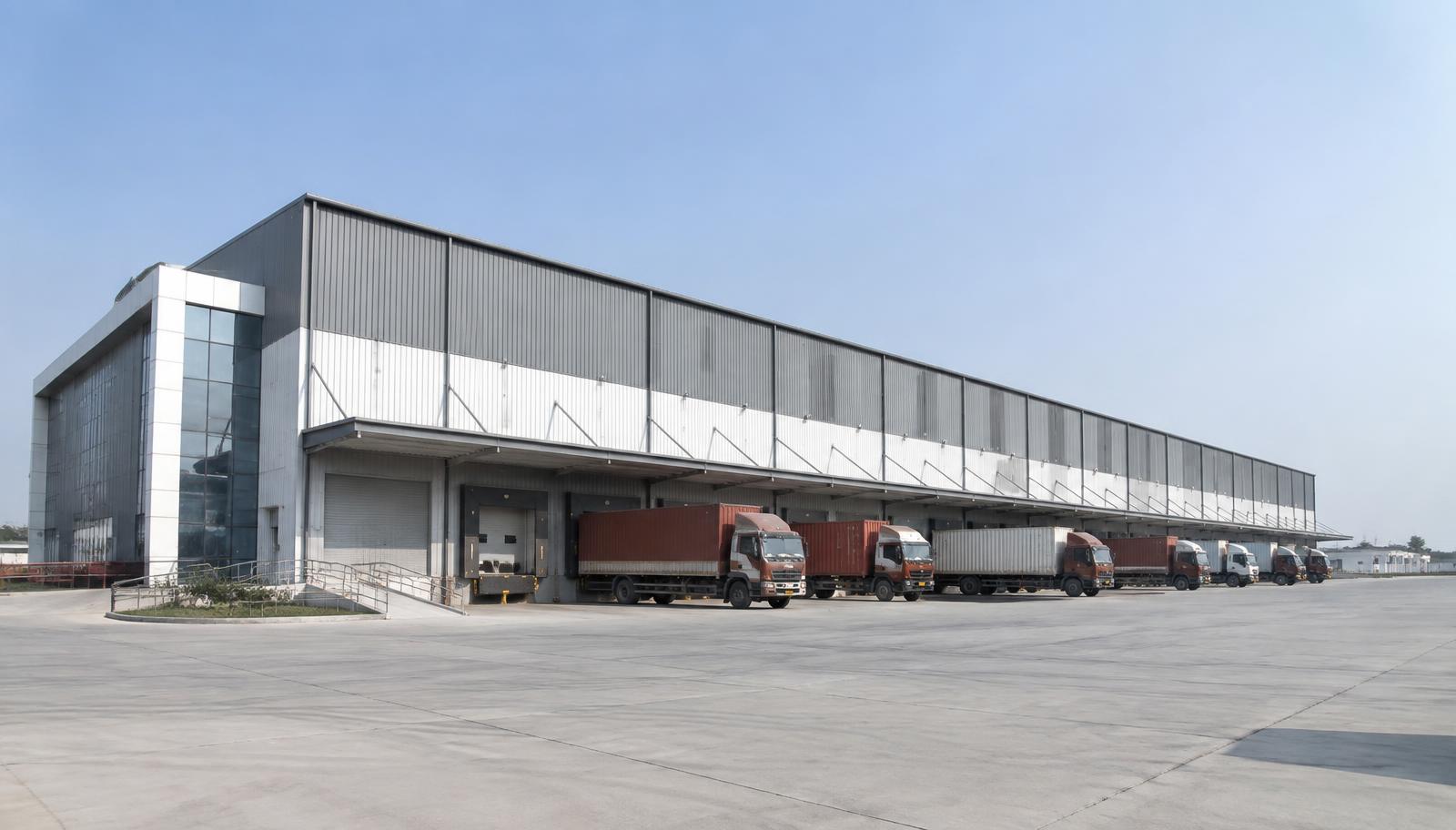
You have found the perfect spot for a warehouse. Good road, growing logistics demand, a tenant already asking. But one question keeps you awake: how do I fund the land and the building? Here is the funding journey, step by step, the way we explain it to entrepreneurs across the table.
Quick answer
Warehouse projects are commonly funded in two stages — land purchase, then construction. Eligible projects may indicatively get around 60%–75% of the lender-assessed eligible cost, with the rest as promoter contribution. Construction money is usually released stage by stage after inspection. Amounts, terms and approval depend entirely on each lender's policy and assessment.
Stage 1
Land purchase
Margin
Promoter contribution
Stage 2
Construction, stage-wise
Done
Operational warehouse
Please note: MoneyMax Fingrow is a loan advisory firm, not a lender. Figures in this article are illustrations, not sanction quotes. Final eligibility, amount, rate, tenure and approval are decided by the bank or NBFC.
Why warehouse funding needs planning before you buy land
Here is the mistake I see again and again. The entrepreneur pays an advance for land. Then they walk into the bank.
And the bank says: the title has a gap. Or the land use is agricultural. Or the access road is too narrow for trucks. Or the valuation is far below what you paid.
Now your money is stuck. In Coach Dhejo's 25+ years in business funding, one lesson repeats: check bankability first, buy land second.
Stage 1 — Funding the land purchase
You identify suitable warehouse land. Before funding, the lender typically evaluates:
- Your borrower profile and business track record
- Project viability — who will use or rent the warehouse?
- Title and legal clearance
- Valuation by the lender's empanelled valuer
- Location, access and road connectivity
- Permitted land use, and other lender-specific requirements
Depending on policy and eligibility, roughly 60%–75% of the eligible or accepted land cost/value may be considered. You bring the balance.
Simple illustration (not a sanction quote)
| Eligible land cost | ₹4 crore |
| Indicative funding at 70% | ₹2.8 crore (lender) |
| Promoter contribution | ₹1.2 crore (you) |
Once your contribution is in and the lender's conditions are met, the purchase is registered and the mortgage or security is created as applicable.
Between land and construction: approvals first
Registration done. Can you start building? Not yet.
Lenders generally expect applicable approvals before construction finance is drawn. Depending on location and project, these may include:
- Approved building plan
- Planning or local authority permission
- Land-use conversion, where required
- Fire, safety, environmental or other statutory approvals
There is no single universal list. Your architect and the lender's legal and technical team will confirm what applies to your site.
Stage 2 — Funding warehouse construction
Get a detailed construction estimate from a qualified engineer or architect, and a solid project report. The lender then decides the eligible project cost — which may be lower than your total budget.
Costs that may not be funded
Depending on lender policy, items such as these may be excluded from eligible construction cost:
- Compound wall
- Overhead water tank
- Sump
- Land filling / site filling
Not every lender excludes them. But plan as if you will pay for them yourself until your lender confirms otherwise.
On the eligible construction cost, around 60%–75% funding may be possible, subject to policy and eligibility. The balance is your promoter contribution.
Promoter contribution comes first
This surprises many first-time builders. The bank usually does not put money in first. You do.
Typically, you invest your required margin as per sanction terms and begin work — foundation and initial construction. Once your contribution is evidenced and progress is verified, the lender starts disbursing. The exact sequence varies by lender, so read your sanction letter carefully. Our sanction letter checklist helps.
Stage-wise disbursement: how the money is released
Construction funding is generally not handed over as one lump sum. It is released as the building rises, after an engineer, valuer or technical inspection, and verification of progress, invoices or certificates as required. Illustrative stages:
- Foundation / plinth
- Structural work (columns, frame)
- Roofing
- Flooring and services (electrical, plumbing, drainage)
- Completion
Stages and percentages vary by lender and project.
Detailed example: a ₹10 crore warehouse project
Illustration only — not a sanction quote. Excludes separately funded or non-eligible costs, and is subject to lender assessment.
| Component | Eligible cost | Lender (70%) | Promoter (30%) |
|---|---|---|---|
| Land | ₹4 Cr | ₹2.8 Cr | ₹1.2 Cr |
| Construction | ₹6 Cr | ₹4.2 Cr | ₹1.8 Cr |
| Total | ₹10 Cr | ₹7 Cr | ₹3 Cr |
The cash-flow sequence
- Bankability check of the land, then sanction for the project.
- You bring ₹1.2 Cr for land; lender funds ₹2.8 Cr; registration and mortgage.
- Approvals and plan sanction obtained.
- You bring your construction margin (₹1.8 Cr) and start foundation work.
- Lender releases ₹4.2 Cr in stages after each inspection.
- Separately, you fund compound wall, sump, tank, filling and other excluded items — plus a contingency.
Want to see what the EMI on ₹7 crore might look like? Try the EMI Calculator.
What banks and NBFCs examine
- Promoter and business profile
- CIBIL / credit history (see our guide to accurate loan applications)
- Financial statements and cash flow, including DSCR
- Existing debt and EMIs
- Property title and valuation
- Access and road connectivity
- Proposed warehouse use
- Tenant, lease or offtake arrangements, where relevant
- Projected rental or business cash flow
- Approvals and construction estimate
- Your promoter contribution and its source
Documents commonly required
Lists vary by lender, but expect:
- KYC of the business and promoters
- ITRs and audited financial statements (usually 2–3 years)
- Bank statements and existing loan sanction letters
- Land title documents, parent documents and encumbrance certificate
- Sale agreement for the land
- Approved plan and applicable permissions
- Engineer's or architect's estimate and project report
- Lease, LOI or offtake details, where relevant
Common mistakes to avoid
- Buying land before checking bankability
- Assuming market value equals the lender's eligible value
- Not budgeting for promoter contribution and excluded works
- Starting construction without approvals
- A weak or unrealistic project report
- Expecting full upfront disbursement
- Ignoring interest during construction and pre-operative costs
- Underestimating contingency
Related funding options
If you already own property, a loan against property may help fund part of the promoter margin. For the long-term loan itself, read about term loans for business, and once operational, a working capital limit keeps day-to-day operations running. Check your indicative position with the eligibility calculator.
Frequently asked questions
Can I get a loan to buy land and build a warehouse?
Often, yes — many warehouse projects are funded in two stages: land purchase first, then construction. It depends on the lender's policy, your eligibility, the land's title and permitted use, valuation, approvals and project viability. Some lenders fund only construction, so check before buying land.
How much warehouse funding can I get?
Indicatively, eligible projects may get around 60%–75% of the lender-assessed eligible cost, with the balance as promoter contribution. This is not guaranteed or universal. The actual amount depends on the lender, valuation, your cash flow, existing debt and the project report.
Can a bank finance warehouse land?
Some banks and NBFCs finance land purchase when it is part of a defined warehouse project with clear title, suitable access and permitted land use. Others treat bare land cautiously or fund it only with construction. Confirm the lender's land policy before you commit to a purchase.
How is a warehouse construction loan disbursed?
Usually stage by stage, not as one lump sum. After the promoter's margin is evidenced, the lender releases funds as construction progresses — for example foundation/plinth, structure, roofing, flooring/services and completion — after technical inspection. Stages vary by lender and project.
What is promoter contribution?
Promoter contribution, or margin, is the share of the eligible project cost the borrower must invest from their own funds. Lenders generally expect it to be brought in and evidenced as per sanction terms before or alongside their own disbursement.
Which construction costs may not be funded?
Depending on lender policy, items such as compound wall, overhead water tank, sump and land/site filling may be excluded from the eligible construction cost. Not every lender excludes them, but budget for them separately from your own funds until your lender confirms.
Can banks and NBFCs finance logistics or industrial warehouses?
Yes, many banks and NBFCs consider logistics, industrial and agri warehouses and godowns, either as term loans for owner use or against lease rentals where a tenant is in place. Eligibility and structure depend on use, location, tenancy and cash flow.
What documents are needed for a warehouse loan?
Typically KYC of the business and promoters, ITRs and financial statements, bank statements, existing loan details, land title documents and encumbrance certificate, sale agreement, approved plan and permissions, engineer's estimate, project report, and lease or offtake details where relevant. Lists vary by lender.
Right Knowledge. Right Funding. Right Time.
Planning a warehouse, logistics hub or godown?
Speak with MoneyMax before you buy the land. We help you check bankability and structure the funding. Bank on us, not on the bank.
Book a Loan ConsultationComments
Be the first to comment on this article.