
Business Loans
Machinery Loan in India: A Simple Guide for Small Business Owners
Oct 30, 2026
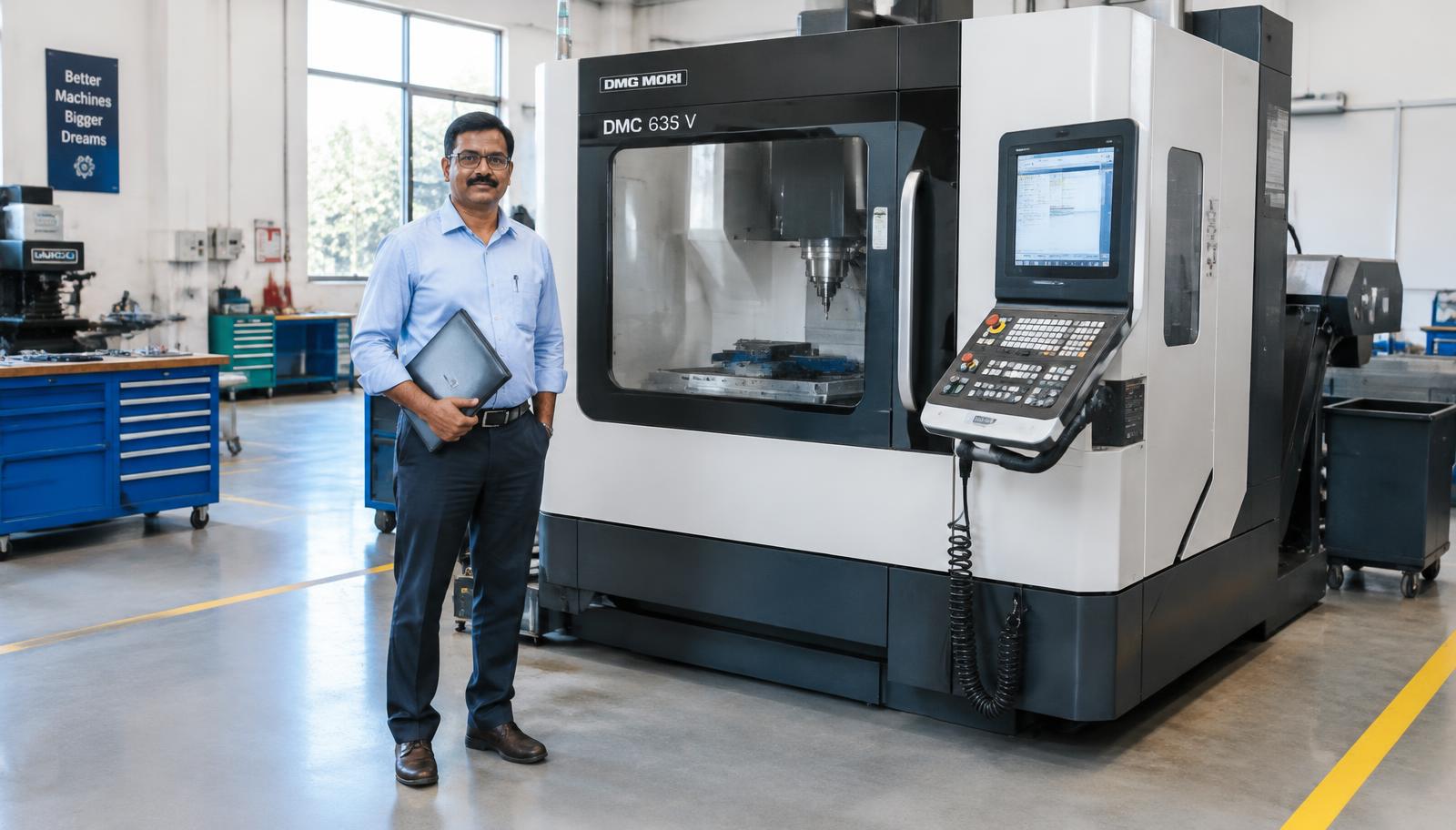
A new machine can double your output. But most business owners pay for it the wrong way. Here is the simple way to think about a machinery loan.
Quick answer
A machinery loan is a business loan to buy a machine. The bank usually pays the supplier, you put in a part of the cost yourself, and you repay in monthly EMIs over a few years. Choose a tenure where the machine's extra income comfortably pays the EMI.
A common story
Suresh runs a small fabrication unit. He gets a big order. His old machine is slow.
He takes money from his working capital and buys a new machine in cash.
The machine works well. But now he has no money to buy raw material or pay salaries. The order gets delayed.
The machine was the right decision. Paying for it from day-to-day money was the wrong one.
Long-term things like machines should be paid with long-term money. That is what a machinery loan is for.
What is a machinery loan?
It is a type of term loan. You borrow a fixed amount to buy a machine or equipment, and you repay it in EMIs over a fixed period.
In most cases:
- The bank pays the money directly to the machine supplier.
- The machine is kept as security (called hypothecation) until you finish paying.
- You pay a part of the cost from your own pocket. This is called margin.
What can you buy with it?
- Production machines — CNC, lathe, injection moulding, printing, packaging.
- Medical equipment for clinics, labs and hospitals.
- Food processing and kitchen equipment.
- Construction equipment.
- Generators, solar systems and other plant equipment.
Some lenders also fund used machines, but usually for a smaller amount and shorter period.
Who can get a machinery loan?
Each lender has its own rules. In general, lenders like to see:
- A running business with some years of track record.
- ITR and financials showing the business makes money.
- Clean bank statements — no frequent cheque bounces.
- A good credit score for the business and the owners. See our CIBIL score guide.
- A clear reason: why this machine, and how it will bring more income.
Documents usually needed
- KYC of the business and the owners/partners/directors.
- Udyam and GST registration.
- ITR and financials for the last 2–3 years.
- Bank statements for the last 6–12 months.
- GST returns.
- Quotation or proforma invoice from the machine supplier.
- Details of existing loans.
- For bigger amounts, a short project report.
The list can change by lender. Our document checklists make it easier.
How much loan can you get?
Two things decide it:
- The machine cost — the lender funds a part and you pay the margin.
- Your repayment ability — your yearly cash surplus must comfortably cover all EMIs, old and new.
Get a first idea with our eligibility calculator.
A simple EMI example
Illustration only. Not a quote. Actual rate and terms are set by the lender.
Machine cost: ₹25 lakh. Say you pay ₹5 lakh yourself and borrow ₹20 lakh for 5 years at an assumed 11% per year.
The EMI comes to roughly ₹43,500 per month.
Now ask one simple question: Will this machine bring at least ₹43,500 extra profit every month? If yes with room to spare, the loan makes sense. If it is tight, take a longer tenure or a cheaper machine.
Try your own numbers on our EMI calculator.
Can I get it without collateral?
The machine itself is the main security. Some lenders ask for extra security like property.
For eligible micro and small businesses, the CGTMSE scheme can give the lender a guarantee, so extra collateral may not be needed. Whether it applies is the lender's decision.
If you own property and need a bigger amount, a loan against property can sometimes give a longer tenure and lower EMI. Compare both.
Machinery loan vs paying cash
- Paying cash: no interest, but your working capital gets stuck.
- Machinery loan: you pay interest, but your cash stays free to run the business.
For most growing businesses, cash in hand is more valuable. Read why profitable businesses still run out of cash.
7 mistakes to avoid
- Using CC/OD money to buy a machine.
- Choosing a very short tenure to "finish fast" and then struggling with a big EMI.
- Buying a bigger machine than your orders need.
- Looking only at interest rate and ignoring processing fee, insurance and other charges.
- Applying to many lenders at once — too many enquiries can hurt your score.
- Forgetting extra costs: installation, transport, training, power upgrade.
- Not checking the sanction letter before signing.
Steps to apply
- Fix the machine and get the supplier quotation.
- Work out how much extra income it will bring.
- Check your EMI comfort with the calculator.
- Collect documents.
- Compare a few suitable lenders.
- Read the sanction letter carefully, then sign.
Frequently asked questions
What is a machinery loan?
It is a business loan used to buy a machine or equipment for your business. Usually the bank pays the machine supplier directly, and the machine itself is often taken as security until the loan is repaid.
How much of the machine cost will the bank pay?
It differs by lender and by your profile. Many lenders fund a large part of the machine cost and expect you to pay the rest as your own contribution (margin). The exact percentage is decided by the lender.
Can a new business get a machinery loan?
It is harder but not impossible. Lenders usually prefer some business track record. New businesses may be looked at with a project report, promoter experience, extra security or schemes such as CGTMSE where applicable.
Do I need collateral for a machinery loan?
Not always. The machine is the primary security. Some lenders ask for extra security such as property. For eligible MSMEs, CGTMSE cover may reduce the need for collateral, subject to the lender.
Can I get a loan for a second-hand machine?
Some lenders do fund used machines after a valuation, but usually for a smaller share of the value and a shorter tenure. Many lenders fund only new machines.
What is the interest rate on a machinery loan?
Rates depend on the lender, your credit score, your financials, the security offered and the tenure. Compare the full cost — interest, processing fee and other charges — not just the headline rate.
Is MoneyMax a lender?
No. MoneyMax Fingrow is a loan advisory firm and channel partner. We help you prepare and approach suitable lenders; the lender takes the final decision.
Planning to buy a new machine?
Talk to MoneyMax. We'll help you pick the right loan, the right tenure and the right lenders to approach.
MoneyMax Fingrow is an advisory firm and channel partner, not a lender. Final eligibility, rate, amount and approval are decided by the lender.
Comments
Be the first to comment on this article.